The Real Genius of AI Investing: Why Venture Capital Isn’t a 1980s Frito-Lay Sweepstakes
AI investing isn’t Lazlo’s Real Genius sweepstakes machine. VC isn’t closed, founders choose, and even infinite capital can’t guarantee outcomes. The real genius of AI investing is judgment, timing, and knowing when not to invest.
Written by David Thyresson • 4 min read
The Real Genius of AI Investing:
Why Venture Capital Isn’t a 1980s Frito-Lay Sweepstakes
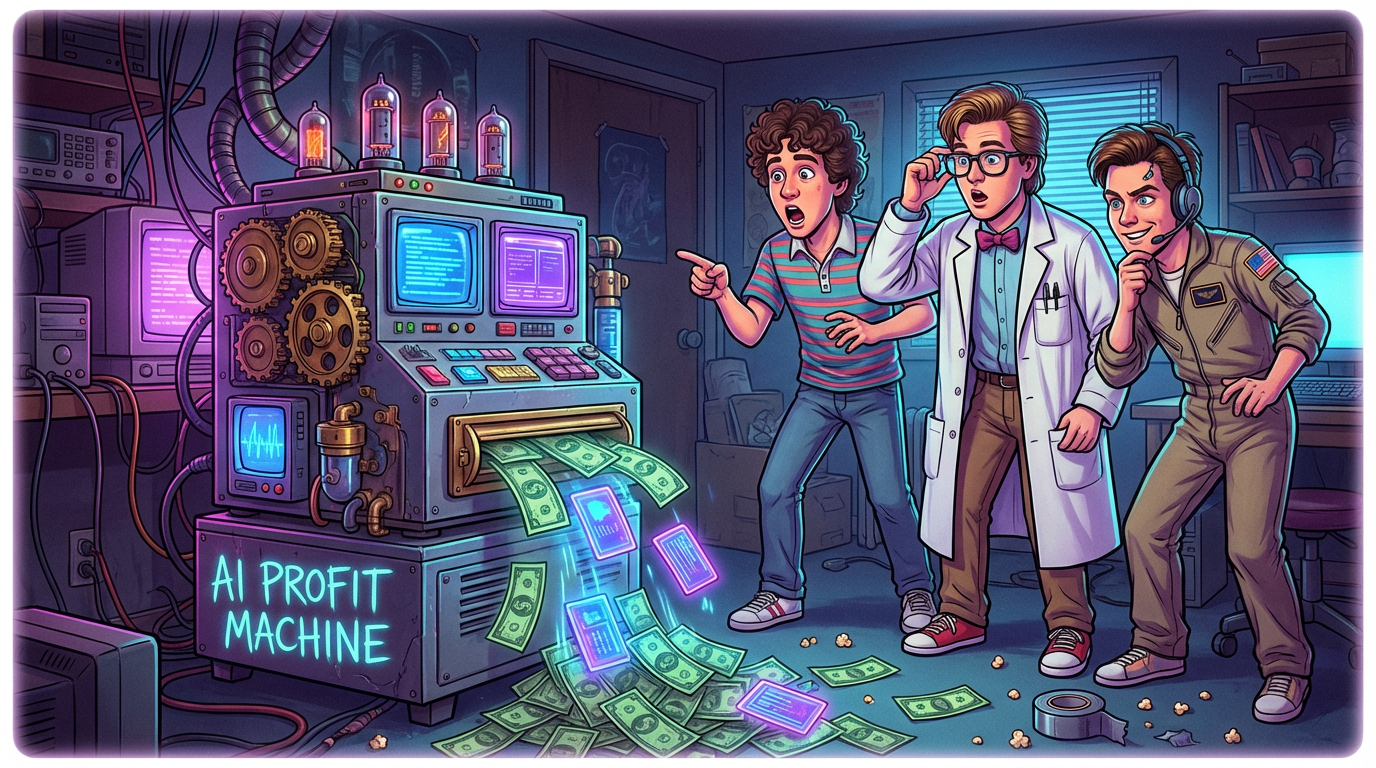
If you watched Real Genius as a kid, you probably remember the subplot. Not the laser, not Val Kilmer’s hair, but Lazlo. The quiet savant who lived in a secret bunker and built a machine that entered a Frito-Lay contest thousands of times, guaranteeing he’d win a slice of every prize.
It was simple math: infinite entries in a closed system equals inevitable winnings.
Some investors look at AI investing and think venture capital should act a little more like Lazlo: “If you’d just invested in all the AI companies, you’d have guaranteed a few winners. Why didn’t you build the machine? Why didn’t you win all the prizes?”

Cute idea. Wrong universe.
Because here’s the thing: venture capital is not a sweepstakes. Venture capital is not a closed system. And even a fund with “infinite capital” doesn’t get to enter every company’s cap table like Lazlo stuffing envelopes into a contest hopper.
Real Investing isn’t Real Genius.
The Temptation of the Lazlo Strategy
Sometimes mega-funds look like they’re running the Lazlo playbook. They dominate rounds, own slices of entire sectors, and control their own secondary markets. It’s tempting to think they’ve created a self-contained ecosystem: a private-market snow globe where they price, buy, sell, and mark each other’s positions.

From the outside, it feels like a closed loop. A conical capital ring. A billionaire’s envelope machine, a private-market snow globe waiting for its popcorn-house moment, when the sealed-in logic finally bursts the bubble.
But Here’s the Catch: Founders Aren’t Tickets
Startups get to reject you. They get to limit allocations. They get to choose your competitor over you. They get to avoid you entirely if they think you’re just trying to “index the future.”
Capital may be abundant, even infinite in the thought experiment, but access isn’t.

Lazlo never had to convince the sweepstakes to let him enter millions of times. Try telling that to a founder with five competing term sheets and a grudge against megafunds.
The Outcome Universe Is Still Open
Even if a fund could invest in every AI startup, that doesn’t create a closed system, because technology outcomes live in the open world:
- Users choose products, not investors.
- Markets reprice everything in public.
- Competitors emerge overnight.
- Power laws reward ownership, not participation.

Owning 1% of every AI company isn’t a strategy; it’s a very expensive form of FOMO
Lazlo’s system guaranteed prizes by overwhelming a fixed set of rules. VCs try the same trick, but the rules keep changing, the players keep multiplying, and sometimes the contest organizer just says, “Sorry, you’re not invited.”
So What’s the Real Genius in AI Investing?
It isn’t spraying your way to statistical certainty. It isn’t building a financial envelope-stuffing machine. It isn’t trying to brute-force a closed system in an open universe.

The real genius (the Real Genius) is knowing when not to invest, knowing why to invest, and knowing that even infinite capital can’t guarantee you infinite outcomes.
Lazlo hacked a sweepstakes. Great investors try to understand the world.
This is the actual game. And that’s where the real genius shows up.
Image prompt using fal and the fal-ai/nano-banana-pro model:
Create a 16:9 cinematic, high-resolution illustration inspired by the visual style of the 1980s movie Real Genius. Show a whimsical, retro-futuristic machine that looks like a hybrid between Laszlo’s mail-in sweepstakes entry device and a modern AI supercomputer. The machine is rapidly generating and spitting out sheets of money and glowing data cards, suggesting that it’s ‘printing profits’ using AI. Include three characters who strongly resemble, but are not identical to, Val Kilmer, Mitch, and Lazlo, young, nerdy 1980s students with expressive reactions. They should be watching the machine with a mix of awe, amusement, and disbelief. Use bright, saturated 80s color palettes, soft neon edges, and subtle movie-poster lighting. Add small Easter-egg details referencing Real Genius, like popcorn kernels or wires taped to the floor. Overall tone: playful, clever, and reminiscent of retro sci-fi comedy. Ideal as a blog hero image.